Advanced Scuba Certifications
An Open Water certification is just the beginning. It grants you the basic knowledge to dive safely in mild conditions, but the underwater world holds far more than what can be seen in the first 18 meters. Progressing through advanced certifications expands your depth limits, increases your bottom time, and significantly improves your safety margins. Here are the core paths most divers take beyond their initial training.
Advanced Open Water Diver
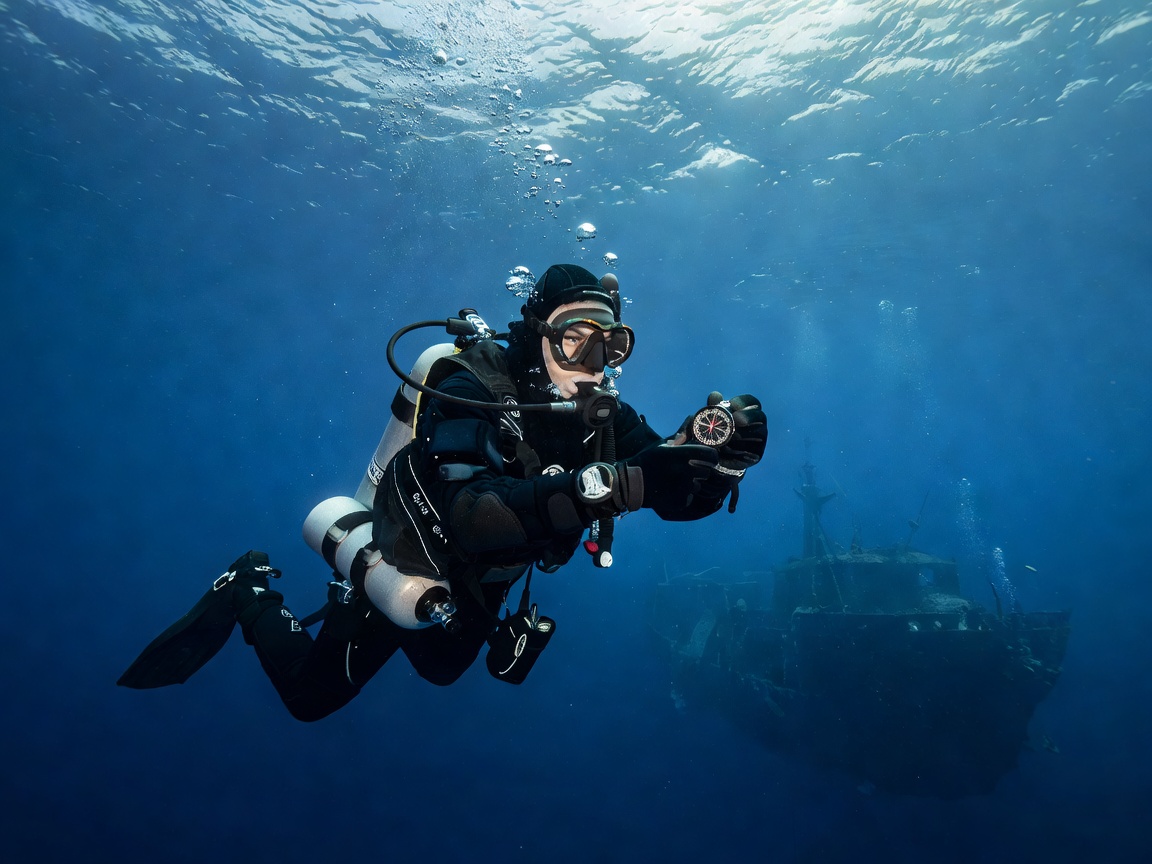
Despite the name, the Advanced Open Water (AOW) course is not solely for "expert" divers; it is designed to be taken immediately after your Open Water certification. The purpose of AOW is to introduce you to different types of diving under the direct supervision of an instructor. The course typically consists of five "adventure dives."
Two dives are mandatory across almost all agencies: Deep Diving and Underwater Navigation. The Deep Dive trains you on the physiological effects of diving down to 30 meters (100 feet), such as nitrogen narcosis and increased air consumption. The Navigation Dive hones your ability to use a compass and natural landmarks to find your way back to the boat without surfacing.
The remaining three dives are electives. Popular choices include Wreck Diving, Night Diving, Peak Performance Buoyancy, and Drift Diving. Completing this course opens up a vast number of global dive sites that mandate an AOW certification for entry.
Enriched Air Nitrox (EANx)
If you look at the tanks on a dive boat, you will often notice some with striking green and yellow bands. These tanks contain Enriched Air Nitrox. Regular compressed air consists of approximately 21% oxygen and 79% nitrogen. Nitrox blends increase the oxygen content—typically to 32% or 36%—and correspondingly reduce the nitrogen.
Because nitrogen absorption is the primary limiting factor for how long you can stay underwater (bottom time), breathing less nitrogen means you can stay down longer. For example, on a dive to 18 meters, standard air gives you about 56 minutes of bottom time. On 36% Nitrox, that jumps to over 100 minutes. The Nitrox course teaches you how to safely analyze cylinder contents, set your dive computer for enriched air, and understand the risks of oxygen toxicity at depth. It is arguably the most useful specialty certification a diver can hold.
Rescue Diver
Ask any seasoned diving professional which course was the most challenging yet rewarding, and almost all will say Rescue Diver. While previous courses focus primarily on your own comfort and skills, the Rescue Diver course shifts your focus to the safety of others.
In this demanding course, you learn to identify stress in other divers before it becomes a full-blown emergency. You run through practical scenarios involving tired divers at the surface, panicked divers, and unresponsive divers underwater. You learn how to safely bring an unconscious diver to the surface, provide in-water rescue breaths while removing their gear, and drag them onto a boat or shore.
To enroll in a Rescue Diver course, you must first complete a recognized CPR and First Aid course. Earning a Rescue certification completely changes your perspective on the dive boat, turning you into an infinitely more capable, self-reliant, and observant buddy.
Master Scuba Diver vs. Divemaster
As you accumulate specialties, you may encounter two similarly named, but fundamentally different titles:
- Master Scuba Diver (MSD): This is the highest non-professional rating in recreational diving. It is a recognition level awarded to divers who have logged a minimum number of dives (usually 50), hold their Rescue certification, and have completed five distinct specialty courses. It denotes a highly experienced recreational diver.
- Divemaster (DM): This is the first professional rung on the diving ladder. Divemasters are trained to assist instructors with students, lead certified divers on tours, and manage dive boat logistics. Earning a Divemaster rating requires intense physical stamina, deep theoretical knowledge of dive physics and physiology, and an internship period working with real students. If you want to work in the scuba industry, this is your starting point.