The Ultimate Scuba Gear Guide
Scuba diving is an equipment-intensive activity. Your life and your comfort depend entirely on the gear you carry below the surface. While rental equipment is readily available at dive destinations worldwide, investing in your own gear ensures a perfect fit, familiarity, and a higher degree of hygiene. This guide breaks down the essential components of a complete scuba rig.
Personal Gear: The Foundation
Whether you rent the heavy components or not, every diver should own their personal gear: mask, snorkel, and fins. Fit is paramount for these items.
- Masks: A leaking mask will ruin a dive instantly. Look for masks with a 100% silicone skirt, which molds comfortably to your face. Tempered glass lenses are mandatory. Low-volume masks sit closer to the face, making them easier to clear of water and providing a wider field of vision. When testing a mask, place it against your face without the strap and inhale gently through your nose—it should stick perfectly without leaking air.
- Fins: Fins translate your leg power into underwater propulsion. There are two main types: full-foot and open-heel. Full-foot fins are worn barefoot and are suitable for warm water boat diving. Open-heel fins require neoprene booties, which are essential if you are doing shore entries over rocky terrain or diving in cooler waters where foot protection is necessary.
- Snorkels: Even though you breathe from a tank underwater, a snorkel is a vital piece of safety equipment for long surface swims. Look for models with a purge valve at the bottom to easily clear water.
Life Support: Regulators and BCDs
Your life support equipment manages your air supply and your position in the water column.
Regulators
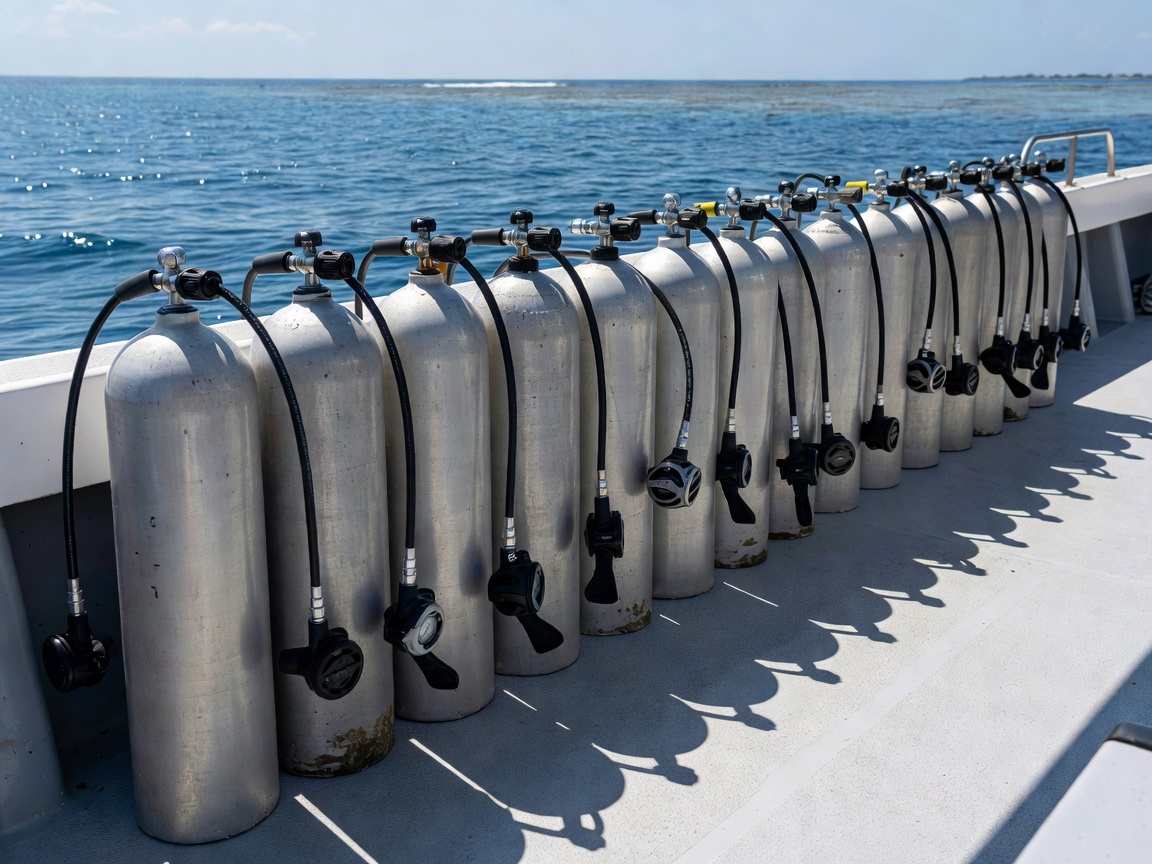
The regulator reduces the high pressure from the scuba tank to a breathable ambient pressure. It consists of a first stage (which attaches to the tank valve) and a second stage (the mouthpiece). High-end regulators offer balanced designs, meaning breathing effort remains consistent regardless of tank pressure or depth. If you dive in cold water, look for an environmentally sealed first stage to prevent freezing and free-flows. You will also need an alternate air source, often called an "octopus," which is a secondary second stage used to share air with a buddy in an emergency.
Buoyancy Control Devices (BCDs)
The BCD allows you to establish neutral buoyancy underwater and float comfortably at the surface. There are two primary styles:
- Jacket Style: The traditional choice for beginners. It wraps around the torso and inflates on the sides, back, and sometimes the front. This provides excellent surface stability and a comforting hug-like feel, though it can create more drag underwater.
- Wing/Backplate Style: Favored by advanced and technical divers, this style places all the air cell capacity on your back. It provides superior horizontal trim underwater, making you highly streamlined. It is also modular, allowing you to swap out harnesses or wings based on the dive requirements.
Dive Computers
A dive computer is arguably the most important piece of modern dive gear. It continuously monitors your depth and time, calculating how much nitrogen your body has absorbed based on complex decompression algorithms (such as the Bühlmann ZHL-16C). It tells you exactly how long you can safely remain at a given depth without requiring mandatory decompression stops.
Entry-level computers are affordable and intuitive, usually worn like an oversized watch. Advanced computers feature air integration (via a wireless transmitter on your first stage) to display your remaining tank pressure on the screen, calculating your air consumption rate in real-time. A good computer is an investment that will grow with you throughout your diving career.
Exposure Protection
Water conducts heat away from the body 25 times faster than air. Even in tropical water, prolonged exposure will lead to chilling.
Wetsuits work by trapping a thin layer of water against your skin, which your body warms up. The neoprene material then insulates that warm layer. Wetsuits are typically classified by thickness: 3mm for tropical waters (26°C / 78°F and above), 5mm for temperate waters, and 7mm for cooler environments.
Drysuits are required for truly cold water. Unlike wetsuits, drysuits seal entirely at the neck and wrists, keeping you completely dry. You wear insulating undergarments beneath the suit. Diving in a drysuit requires additional training, as you must manage air inside the suit to control buoyancy and prevent suit squeeze.
To Buy or To Rent?
If you dive fewer than five days a year on vacation, renting life support gear is often more economical and saves luggage space. However, if you dive locally, take frequent dive trips, or plan to pursue advanced certifications, owning your gear is crucial. Owned gear is rigorously maintained by you, fits perfectly, and provides a level of muscle memory—knowing exactly where your dump valves and alternate air sources are without looking—that significantly enhances underwater safety.