Getting Started with Scuba Diving
Taking your first breath underwater is an experience that defies description. Weightless and immersed in an alien environment, you enter a world that covers over 70% of our planet but remains unseen by most. If you are considering becoming a certified diver, the process might seem intimidating, heavily reliant on technical equipment and safety protocols. However, modern scuba diving training is designed to be accessible, safe, and incredibly rewarding.
Prerequisites for Scuba Diving
Before you enroll in an Open Water Diver course, there are a few basic prerequisites you must meet. Scuba diving does not require you to be a highly conditioned athlete, but a baseline level of physical fitness and comfort in the water is essential.
- Age Requirements: Most major training agencies require students to be at least 10 years old to earn a Junior Open Water certification. By age 15, this automatically upgrades to a standard Open Water certification.
- Medical Fitness: You will be required to fill out a standard RSTC (Recreational Scuba Training Council) Medical Statement. If you have a history of asthma, heart conditions, or severe ear issues, you will need clearance from a physician before you can participate.
- Water Skills Assessment: Instructors will test your basic water comfort. You must be able to swim 200 meters (or 300 meters with mask, snorkel, and fins) without stopping, though there is no time limit. You must also float or tread water in deep water for 10 minutes.
Choosing a Training Agency
A common point of confusion for beginners is the variety of acronyms associated with dive training. PADI (Professional Association of Diving Instructors), SSI (Scuba Schools International), NAUI (National Association of Underwater Instructors), and SDI (Scuba Diving International) are among the most recognized globally.
The truth is that all major agencies adhere to the standards set by the World Recreational Scuba Training Council (WRSTC). This means a basic open water course will cover the same fundamental physics, physiology, and underwater skills regardless of the agency. An open water certification from any recognized agency will allow you to dive anywhere in the world, rent gear, and board dive boats. Rather than agonizing over the agency, focus on finding a reputable dive center and a patient, experienced instructor.
The Open Water Course Structure
The standard entry-level certification is typically called the Open Water Diver course. It is generally broken down into three distinct phases, designed to gradually build your knowledge and comfort.
1. Knowledge Development (Academics)
The academic phase covers the principles of diving. You will learn about how pressure affects your body, how to choose and assemble gear, and how to plan dives safely. Historically done in a classroom, most agencies now offer comprehensive e-learning modules. This allows you to complete the reading, quizzes, and final exam at your own pace at home before ever stepping foot in a dive shop.
2. Confined Water Dives
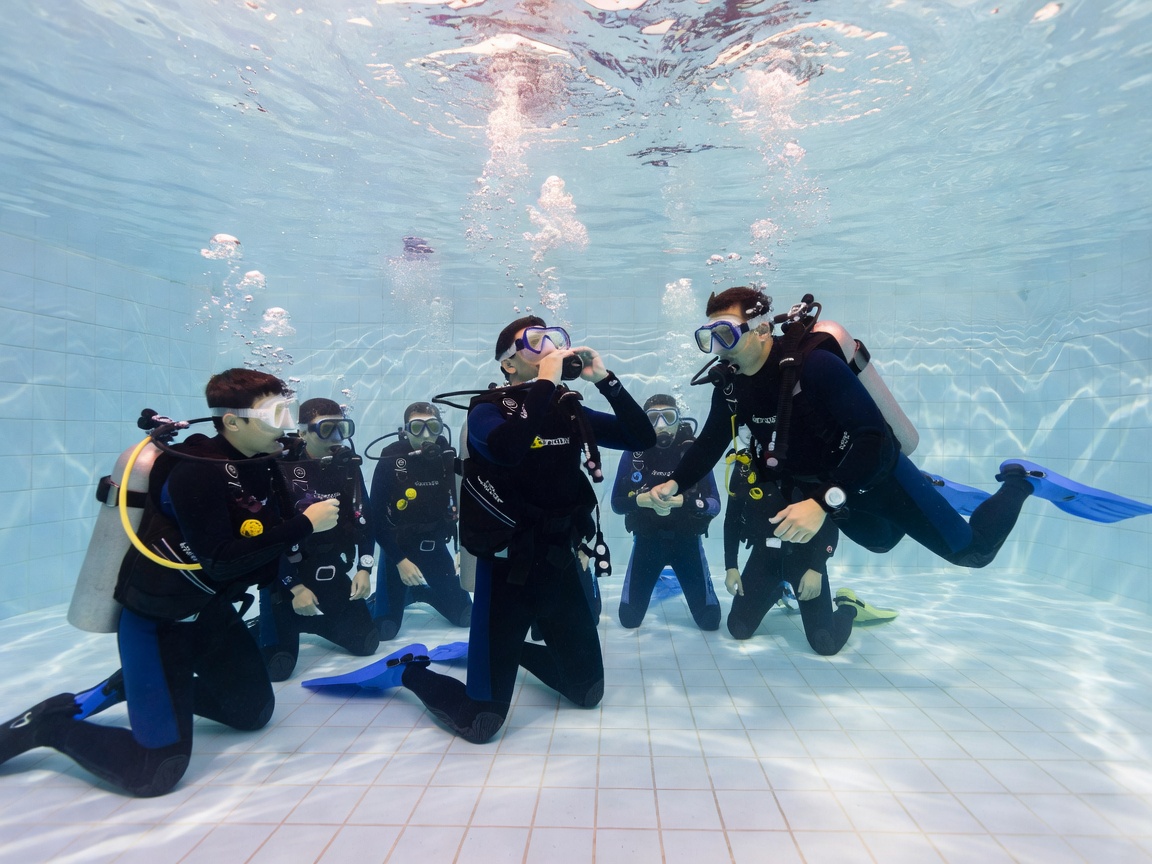
Your first underwater experiences will be in a swimming pool or a pool-like environment (such as a calm, shallow bay). Here, you will learn and practice essential skills. You will practice clearing water from a flooded mask, retrieving a lost regulator, establishing neutral buoyancy, and communicating via hand signals. You will also run through emergency protocols, such as how to safely share air with a buddy. The goal of the confined water phase is to build muscle memory so these skills become second nature.
3. Open Water Dives
The final phase puts everything you have learned into practice in an open water environment (an ocean, lake, or quarry). Over the course of four distinct dives—usually spread across two days—you will demonstrate your mastery of the skills you learned in the pool, while also getting to enjoy the underwater scenery. Once you successfully complete these four dives, you are certified to dive independently with a buddy to a maximum depth of 18 meters (60 feet).
Costs and Timeframes
The cost of an Open Water course varies significantly based on location. Doing your certification locally at a municipal quarry might cost between $350 and $550. Doing it at an exclusive tropical resort might push the cost closer to $700. These fees generally cover your e-learning materials, instructor time, pool fees, and the rental of heavy gear (BCD, regulators, tanks, and weights).
Many shops require you to purchase your own personal gear—mask, snorkel, and fins—before the course begins. This is because personal gear relies heavily on a perfect fit, which rental fleets struggle to provide. A quality starter set of personal gear typically costs between $150 and $250.
As for time, a full Open Water course usually requires three to four full days. However, many divers opt for a "referral" course. In this scenario, you complete the academics and pool work at your local dive shop over a weekend, then take your referral paperwork to a tropical destination to complete the four open water ocean dives in warm, clear water.
Next Steps
Once you are certified, the most important thing to do is dive. Your certification does not expire, but your skills will fade if not used. Join a local dive club, book a weekend trip, and start logging dives. The underwater world is vast, and your Open Water certification is merely the key to the front door.